
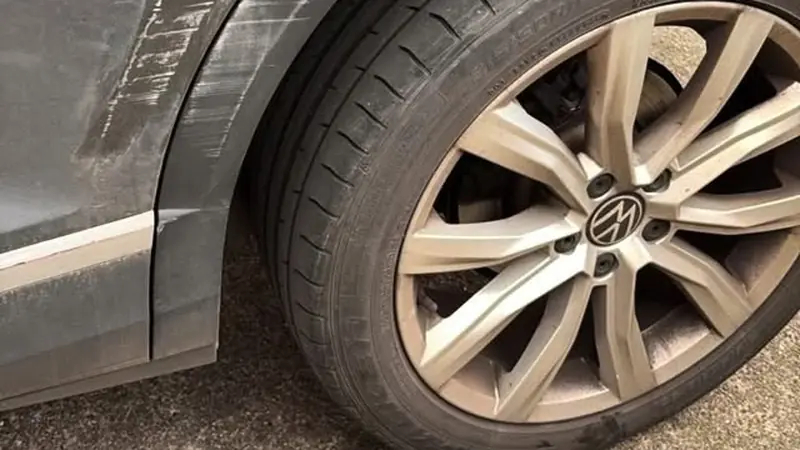
Not all scratches are equal. Some disappear with a machine polish, others need filling, colour matching and blending. Knowing how deep a scratch goes tells you a lot about how it can be repaired, how long it will take and how urgent it is.
The layers of your car's paint
Most modern cars have several layers of finish on top of the metal or plastic panel:
- Clear coat (lacquer): the transparent top layer that gives the gloss and protects the colour
- Base coat: the colour itself
- Primer: the layer that helps paint bond to the panel, often grey, white or black
- The panel: steel, aluminium or plastic
The deeper a scratch goes through these layers, the more work it needs.
The fingernail test
Run a fingernail gently across the scratch. If your nail doesn't catch, the scratch is probably only in the clear coat. If it catches, the scratch has likely gone into the colour or deeper. If you can see a different colour underneath, such as grey primer or shiny metal, it has gone through the paint.
Light scratches: machine polishing
Fine scratches, swirl marks and scuffs that sit only in the clear coat can often be removed by machine polishing, also called paint correction. A thin layer of lacquer is levelled so the scratch disappears and the gloss comes back. No paint is added, so it's usually the quickest and cheapest fix.
Deeper scratches: fill, colour match and blend
Once a scratch has gone into the colour or primer, polishing won't remove it. The scratch is cleaned out and filled, then primed. Paint is mixed to your car's colour, checked against the car and applied over the repair, then faded into the surrounding paint and lacquered. Done properly, the repair should be very hard to spot.
Scratches down to bare metal
If you can see bare steel, don't leave it too long. Exposed metal can start to rust, and rust spreads under the surrounding paint over time, making the eventual repair bigger. Plastic bumpers don't rust, but deep gouges can still collect dirt and look worse over time.
Why touch-up pens often disappoint
Touch-up pens can be useful for a tiny chip, but on a scratch they usually leave a raised line of paint that catches the light, and the colour rarely matches perfectly. They can also make a professional repair more work later, because the touch-up paint has to be removed first.
Key marks across several panels
A keyed car often has long scratches running across doors and wings. The same techniques apply, but each panel is repaired and blended in turn. Our guide to what to do if your car has been keyed covers the next steps, including insurance.
Frequently asked questions
Do scratch remover products work?
Scratch remover compounds can improve very light marks in the clear coat, much like a gentle polish. They won't remove a scratch that has gone into the colour or primer.
Can you repair scratches on metallic or pearl paint?
Yes. Metallic and pearl colours need extra care to match the way the flakes sit in the paint, which is why paint is checked against the car rather than relying on the paint code alone.
Are scratches charged for on lease returns?
Leasing companies commonly follow BVRLA guidelines, which generally accept small scratches of around 25mm or less where the primer or bare metal isn't showing. Deeper or longer scratches are often charged. Check your own agreement for the exact limits.